Exterior Wall Panels: How to Select Thickness, Fixing, and Finish
Exterior wall panels don’t fail because of design intent - they fail because of wrong thickness, incorrect fixing logic, or unfinished detailing.
At DECO, we believe a façade panel must be chosen as an engineered composition: thickness + reinforcement + anchors + joints + finish system - each element working in harmony with the next. Because true architectural beauty is not accidental - it is constructed with precision.
Step 1: Define the Panel Role
Ask first: what is the panel doing?
- Cladding skin (non-structural, ventilated façade)
- Feature frame / fin / deep reveal
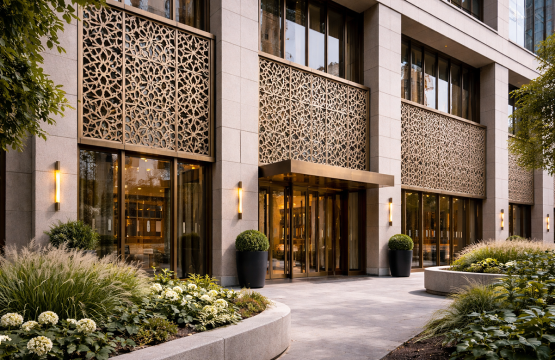
- Screen/jaalis panel
- Boundary or parapet application
- High-abuse zone (plinth, public edges)
The role determines the thickness and fixing.
Step 2: Thickness Selection (What Drives It)
Thickness should be selected based on:
- Panel size and aspect ratio
- Wind load zone (height, corner suction zones)
- Impact risk (ground levels, public-facing areas)
- Finish depth (deep flutes/grooves may need extra section depth)
- Fixing points and anchor zones
- Handling and transport risk
Practical guidance
- Larger panels + higher floors = stronger fixing strategy and engineered thickness
- Slender fins = consider UHPC for slim strength
- Retrofit with weight constraints = consider FRP
Step 3: Fixing System Selection (What Contractors Need)
Most exterior wall panels depend on a secondary framework and mechanical anchorage.
Common fixing approaches
- Bracket + rail system (adjustable, ideal for alignment)
- Anchor inserts + brackets (clean replacement logic)
- Frame-supported panels (useful for screens/jaalis and FRP forms)
Fixing must allow
- Tolerance adjustment
- Thermal movement
- Drainage at joints
- Access for replacement/maintenance
Avoid: rigid fixings at every point with no movement allowance-this is a common crack and joint failure trigger.
Step 4: Finish Selection (Aesthetics + Maintenance Together)
A finish should be selected not only for how it looks at handover, but how it looks after two monsoons and a year of dust.
Finish types (architecture-led)
- Smooth mineral finish (modern, minimal)
- Textured / sandblasted look (hides dust, adds depth)
- Stone-like finish (premium, timeless)
- Fluted / ribbed (Art Deco and contemporary rhythm)
- Grooved / panelled geometry (shadow-driven façade expression)
Maintenance logic
- textured finishes often hide minor stains better
- deep grooves require careful detailing to avoid water traps
- specify cleaning instructions and approved chemical limits
Step 5: Joints and Water (The façade’s real performance layer)
Assume water will reach joints. Design to manage it:
- use consistent joint widths
- provide shadow gaps where appropriate
- specify sealant systems correctly
- ensure drainage paths exist
- avoid ledges that hold water and create streaks
Close: Selection That Prevents Rework
The best exterior panel selection balances:
- design intent (rhythm, scale, depth)
- performance (movement, water, wind)
- execution (site tolerances, handling, replacement)
CTA:
Send your elevation drawing-DECO can propose thickness intent, module sizing, fixing logic, and finish direction aligned to your project conditions.