GRC Panels for Facades: Design Freedom, Performance, and Detailing Guide
A façade is never just a surface-it’s a building’s identity, performance envelope, and long-term maintenance story. GRC (Glass Reinforced Concrete) panels sit in a sweet spot where architectural expression meets constructability: crisp profiles, rich textures, sculpted geometry, and a material language that reads like stone-without the bulk.
This guide walks through what matters on real projects: design options, performance fundamentals, panel detailing, fixing systems, and site execution.
What Are GRC Facade Panels?
GRC is a cement-based composite reinforced with alkali-resistant glass fibers. In façade applications, it’s typically produced as thin, lightweight panels compared to traditional precast concrete. The result: a cladding solution that can be moulded, patterned, fluted, ribbed, carved, and shaped for modern or classical elevations.
Why Architects Choose GRC: Design Freedom That Builds
1) Form without compromise
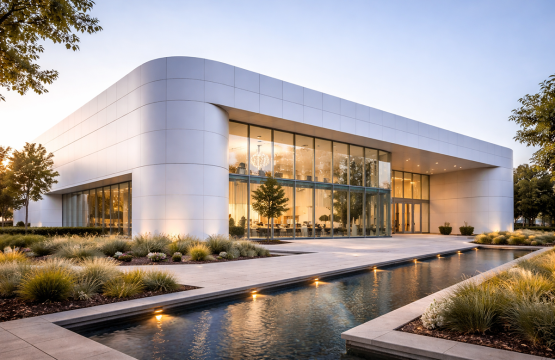
GRC can produce curves, deep reveals, fins, cornices, and framed geometries-ideal for Art Deco, neo-classical, contemporary minimal, and parametric patterns.
2) Finish versatility
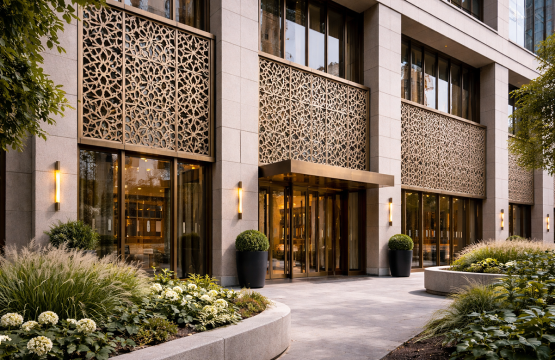
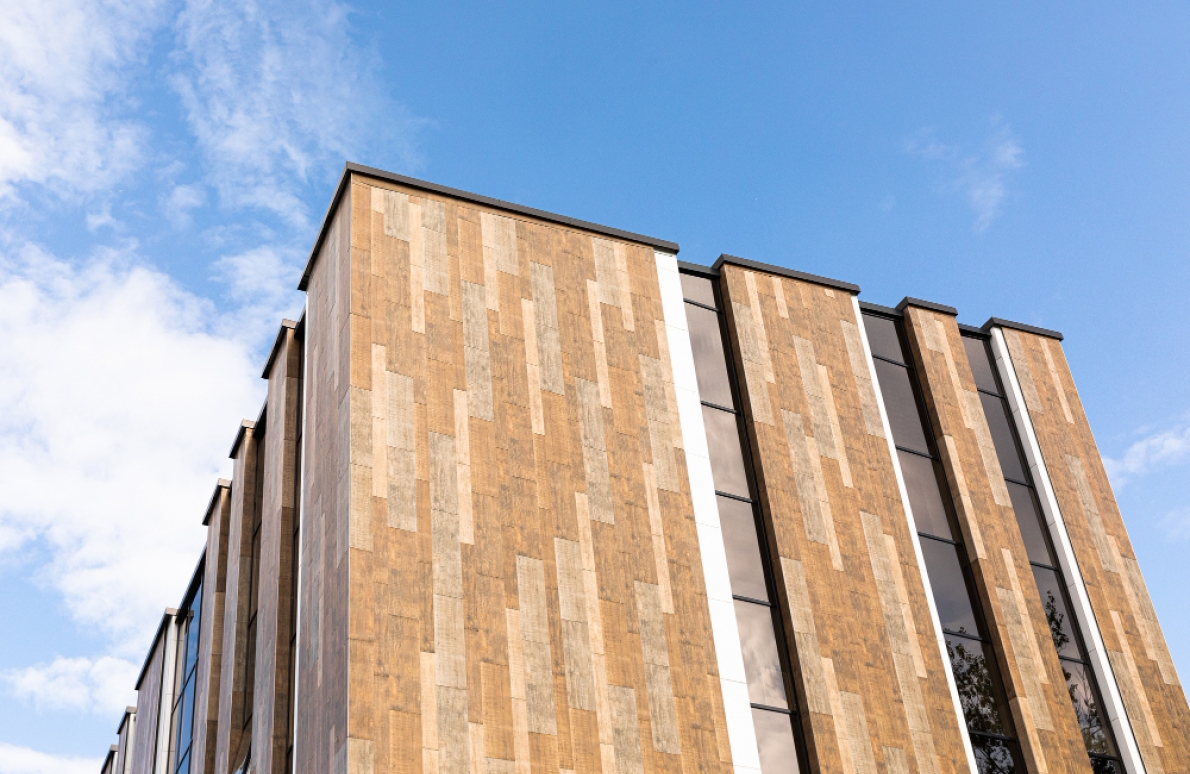
From smooth to textured, stone-like, matte mineral, or custom pigmentation-GRC can hold design intent across large elevations with consistent module logic.
3) Modularity for scale
With smart panelization (module sizes, repeat patterns, corner logic), GRC enables large façades to remain fabrication-friendly and fast to install.
Performance: What GRC Does Well (and What It Needs from Detailing)
GRC is a façade cladding-not the primary structure. Its performance comes from a mix of panel engineering + substructure + joints.
Key performance considerations
- Wind load & anchorage design: panel weight and suction forces must be engineered into the bracket/anchor system.
- Thermal movement: design joints to allow movement without cracking.
- Water management: detailing must assume water will reach the joints-your goal is to control drainage, not pretend water won’t enter.
- Impact resistance: appropriate thickness, ribbing, and backing frame design matter-especially at lower floors.
Panel Detailing Guide (Architect + Contractor Essentials)
1) Panelization strategy
A great façade often fails at the module stage. A strong strategy includes:
- consistent module sizes
- repeatable corner conditions
- alignment with window grids
- manageable panel weight for handling
- minimal “one-off” specials
DECO note: If your design includes deep fins, reveals, or fluting, lock your module rhythm early-then prototype one “typical bay” as a mockup.
2) Fixing systems (typical approach)
Most GRC façades use a secondary structural frame (GI/MS/Aluminum as per project environment) and mechanical anchors/brackets connected to embedded inserts in the panel.
Best practices
- design for tolerance (frames are never perfectly straight on site)
- allow adjustability at brackets
- isolate dissimilar metals in coastal environments
- ensure access for future replacement of individual panels
3) Joints and movement
The joint is where performance lives.
- Use shadow gaps for clean lines and controlled movement
- Provide backer rod + sealant where required
- Detail vertical drainage paths so water exits safely
- Avoid trapping water at ledges and returns
4) Corners, returns, and edges
Corners must be resolved as a system, not a sketch detail.
- prefer wrap-around returns where feasible
- avoid fragile needle edges-use engineered radii/chamfers
- if sharpness is critical, consider UHPC for “razor-edge” intent
Common Site Problems (and How to Prevent Them)
Hairline cracks: often from poor handling, inadequate movement joints, or rigid fixings.
Staining/efflorescence: typically from water management failures or improper curing/sealing approach.
Alignment issues: substructure tolerance not accounted for.
Chipping: insufficient edge protection during transport and lifting.
Specification Checklist (Quick Copy for Architects)
Include:
- required panel thickness range and tolerance
- finish standard and sample approval process
- fixing system intent: bracket type, SS grade, corrosion protection
- joint width + sealant system
- mockup requirement (visual + water behavior + alignment)
- installation QA checklist and acceptance criteria
Where GRC Wins
Choose GRC when you need strong architectural expression, controlled weight, and repeatable custom geometry-provided the façade is detailed like an envelope, not a sculpture.
DECO can support: panel design assist, shop drawings, mockups, finish sampling, and execution detailing for façade-grade outcomes.
CTA:
Share your elevation and module grid-DECO will propose a panelization and detailing strategy aligned to your design language and site realities.