Modern Jali Façade Design Ideas for Hotels, Malls and Premium Residences
Modern architecture is no longer only about height, glass and clean lines. Today, buildings need identity. They need depth, texture, climate response and a design language that makes them memorable. This is why modern jali façade design is becoming an important choice for architects, developers and façade consultants.
A jali façade is not just a decorative screen. It is an architectural layer that can shape sunlight, create privacy, support airflow and transform the personality of a building. From hotels and malls to premium residences, GRC jali screens are now being used to create elevations that are functional, expressive and project-specific.
In Indian architecture, jalis have always had a strong connection with climate and culture. They were used to filter harsh sunlight, allow ventilation and maintain privacy. In modern buildings, this same idea is being reimagined with materials like GRC, UHPC and FRP. Among these, GRC jali screens are widely preferred for façade applications because they offer design flexibility, durability and customization.
For developers, a jali façade can make a project stand out. For architects, it offers a design system that can be adapted to the project’s concept. For users, it creates a more comfortable and visually rich building experience.
Why Jali Façades Are Relevant in Modern Architecture
A façade is the first visual statement of any building. It communicates the quality, scale and intention of the project before anyone enters the space. A plain elevation may complete the structure, but a well designed jali façade adds character.
Modern jali façades are relevant because they solve multiple design requirements at the same time.
- They provide privacy without closing the space.
- They reduce direct sunlight without blocking natural light completely.
- They add depth and shadow to flat elevations.
- They help create a unique architectural identity.
- They can be customized according to project type and design language.
- They work well across commercial, hospitality and residential developments.
This makes jali screens especially useful for projects where both performance and appearance matter.
1. Jali Façade Design for Hotels
Hotels need façades that are welcoming, premium and memorable. A hotel building must create a strong first impression while also offering comfort and privacy to guests. This makes jali screens a practical and aesthetic choice.
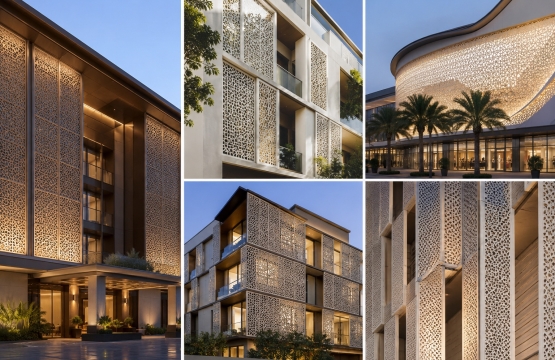
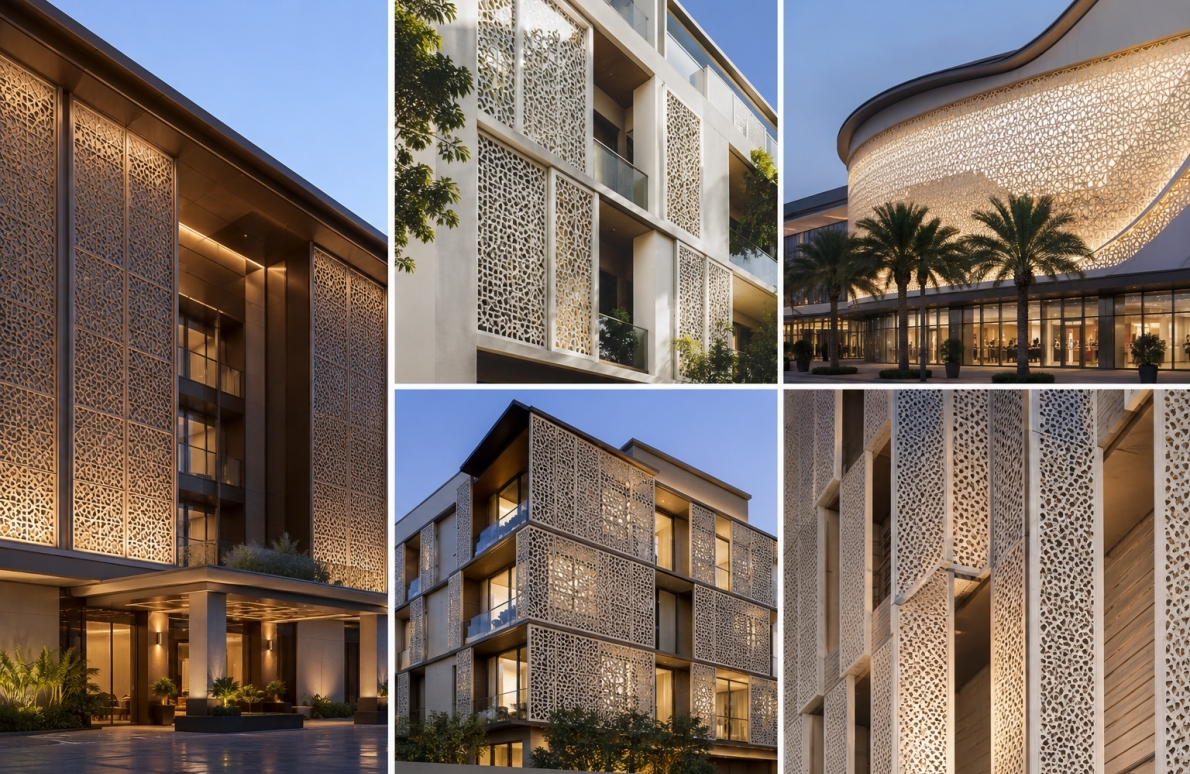
In hotel façade design, GRC jalis can be used on balconies, entrance elevations, courtyard edges, outdoor dining areas, room façades and service zones. They can create privacy for guest rooms while allowing filtered daylight and airflow.
A hotel jali façade can be designed in many styles. For a luxury hotel, the pattern may be intricate and heritage-inspired. For a business hotel, it may be clean, geometric and minimal. For a resort, the jali may include organic or nature-inspired patterns that blend with the landscape.
The main advantage is that the jali can help the hotel develop a distinct identity. Instead of looking like another glass-and-concrete building, the hotel can have a façade that feels crafted, rooted and premium.
Hotel Jali Design Ideas
For hotels, jali screens can be used in several creative ways.
Balcony Privacy Screens
Guest room balconies often need privacy without feeling enclosed. GRC jali screens can create a soft visual barrier while allowing light and air to pass through. This improves both comfort and exterior appearance.
Entrance Feature Façade
The hotel entrance is one of the most important visual areas. A large jali feature wall or screen can create a grand arrival experience. It can also be combined with lighting to create a dramatic night-time look.
Courtyard and Atrium Screens
Hotels often include semi-open courtyards, atriums and transition spaces. Jalis can define these spaces while maintaining openness.
Decorative Service Area Screening
Service zones, staircases and utility areas can disturb the visual quality of the building. Jali screens can hide these areas while allowing ventilation.
Heritage-Inspired Luxury Patterns
For premium hotels, traditional Indian motifs can be reinterpreted in modern GRC jali designs. This creates a blend of cultural identity and contemporary execution.
2. Jali Façade Design for Malls
Malls and retail buildings need to attract attention. The façade plays a major role in how people perceive the property. A mall exterior should feel active, modern and visually strong.
GRC jali screens can be used to create landmark façades for malls. They add scale, depth and pattern to large commercial surfaces. They also help break the monotony of flat cladding or glass-heavy elevations.
In malls, jalis can be used on main façades, entrance zones, parking façades, food court terraces, outdoor plazas and transition areas. Large-format jali screens can create a strong visual identity that is easy to recognize from a distance.
Mall Jali Design Ideas
Large-Scale Geometric Façade Screens
Malls usually have large elevations. Bold geometric jali patterns work well because they can be seen clearly from a distance. These patterns can create rhythm across the façade.
Parking Façade Screens
Parking areas need airflow but often look unfinished or unattractive. GRC jalis can screen parking levels while maintaining ventilation. This helps the mall look complete and premium from the outside.
Entrance Portal Jalis
A mall entrance should feel inviting. Jali screens can be used around entrance portals to create depth, shade and a strong arrival statement.
Light and Shadow Play for Outdoor Plazas
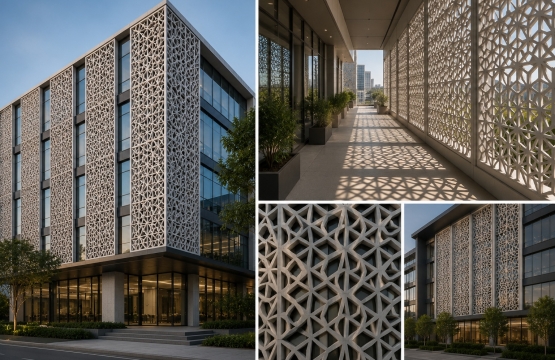
Many malls include outdoor seating zones, walkways and plazas. Jali screens can create shaded areas and attractive shadow patterns, improving the visitor experience.
Brand Identity Through Pattern
A custom jali pattern can become part of the mall’s brand identity. Instead of using generic façade elements, the screen design can be developed specifically for the project.
3. Jali Façade Design for Premium Residences
Premium residential projects need a balance of privacy, comfort and design value. Buyers today look beyond floor plans. They also notice the building elevation, entrance experience, balcony design and overall lifestyle impression.
GRC jalis can add significant value to premium residential façades. They can be used on balconies, podiums, terraces, clubhouse areas, entrance walls and vertical elevation features.
In residential towers, jalis create privacy without making the building feel closed. They add depth to balconies and prevent the elevation from looking flat. They also help create a premium design language that can improve the overall perception of the project.
Residential Jali Design Ideas
Balcony Jali Screens
Balconies are one of the most visible parts of a residential building. Custom jali screens can provide privacy, shade and visual rhythm across the elevation.
Podium Façade Screens
Podium levels often include parking, amenities or service spaces. GRC jalis can improve the look of these levels while allowing ventilation where required.
Clubhouse and Amenity Screens
Premium residences often include clubhouses, lounges and landscaped spaces. Jalis can be used to create semi-private zones within these areas.
Vertical Feature Bands
Instead of covering the entire façade, jalis can be used as vertical design bands. This creates height, rhythm and a signature look.
Terrace and Penthouse Screens
Terraces and penthouse areas need privacy and shade. Jalis provide a refined solution without creating heavy visual barriers.
Pattern Selection for Modern Jali Façades
The pattern is one of the most important decisions in jali façade design. The right pattern depends on the project type, location, scale, privacy requirement and architectural style.
Geometric Patterns
Geometric patterns work well for commercial buildings, malls and contemporary residences. They give a clean and modern look.
Traditional Motifs
Traditional patterns are suitable for hotels, cultural projects, resorts and premium developments that want a rooted design language.
Parametric Patterns
Parametric jalis create a futuristic and dynamic appearance. These are suitable for landmark façades and high-visibility buildings.
Linear Patterns
Linear jalis are simple, elegant and easy to integrate into modern elevations. They are useful when the design needs to remain minimal.
Organic Patterns
Nature-inspired patterns work well for resorts, wellness spaces, landscape areas and biophilic design concepts.
Finish Ideas for GRC Jali Façades
The finish of a jali screen can change the entire look of the building. GRC allows different textures and colours to suit the architectural language.
Common finish directions include:
- Natural stone texture
- Sandstone finish
- Terracotta tone
- Concrete grey finish
- Off-white architectural finish
- Pigmented colour finish
- Smooth modern finish
- Textured handcrafted finish
For hotels, warmer tones can create a premium and welcoming feel. For malls, bold or clean finishes may work better. For residences, neutral and earthy colours can create a timeless appearance.
Design Benefits of GRC Jalis
Light Control
Jalis filter harsh sunlight and create a softer lighting experience. This is useful for balconies, corridors, hotel rooms and commercial façades.
Privacy
They provide privacy without completely blocking the space. This is especially useful for residences and hotels.
Airflow
The openings in the screen allow air movement in semi-open areas like balconies, parking façades and corridors.
Visual Depth
Jalis add shadow, texture and dimension to flat building surfaces.
Custom Identity
Each project can have its own pattern, finish and design language.
Material Durability
GRC is suitable for architectural exterior applications when properly designed, manufactured and installed.
Important Planning Points
Before finalizing a jali façade, architects and developers should consider a few key points.
Façade Orientation
The direction of the façade affects sunlight and shading needs. West-facing façades may need denser screens, while other sides may allow more openness.
Opening Ratio
The size and percentage of openings affect privacy, airflow, light and heat control.
Panel Size
Panel dimensions should be planned based on design, structural support, transport and installation.
Fixing System
The fixing method must be coordinated with the façade consultant and structural team.
Maintenance
Cleaning and access should be considered from the beginning.
Pattern Scale
A small sample pattern may look different when repeated across a large building. The scale should be reviewed properly.
Jali Façades as a Design Investment
For developers, a custom jali façade is not just an additional design feature. It can become a value adding element. A strong façade improves the visual appeal of the project, supports branding and creates better recall.
In competitive real estate and hospitality markets, building identity matters. People remember buildings that have character. A well-designed GRC jali façade can help a hotel feel premium, a mall feel iconic and a residence feel exclusive.
It also helps the building avoid a generic look. Instead of depending only on glass, paint or flat panels, jalis introduce craft, depth and personality.
Final Thoughts
Modern jali façade design brings together tradition, performance and contemporary architectural expression. It allows buildings to manage light, privacy and airflow while creating a strong visual identity.
For hotels, jalis create premium guest experiences and memorable elevations. For malls, they add landmark value and commercial visibility. For premium residences, they offer privacy, shade and architectural character.
With GRC, jali screens can be customized in pattern, scale, finish and application. This makes them suitable for a wide range of modern projects.
A good jali façade is not just about decoration. It is about designing a building surface that responds to climate, supports comfort and communicates identity.
In today’s architecture, the façade must do more than cover the building.
It must speak.
And a well-designed GRC jali screen gives that façade a powerful architectural voice.